Nacht und Nebel, 2024
Ink on paper
, 100 × 140 cm
← Exhibitions
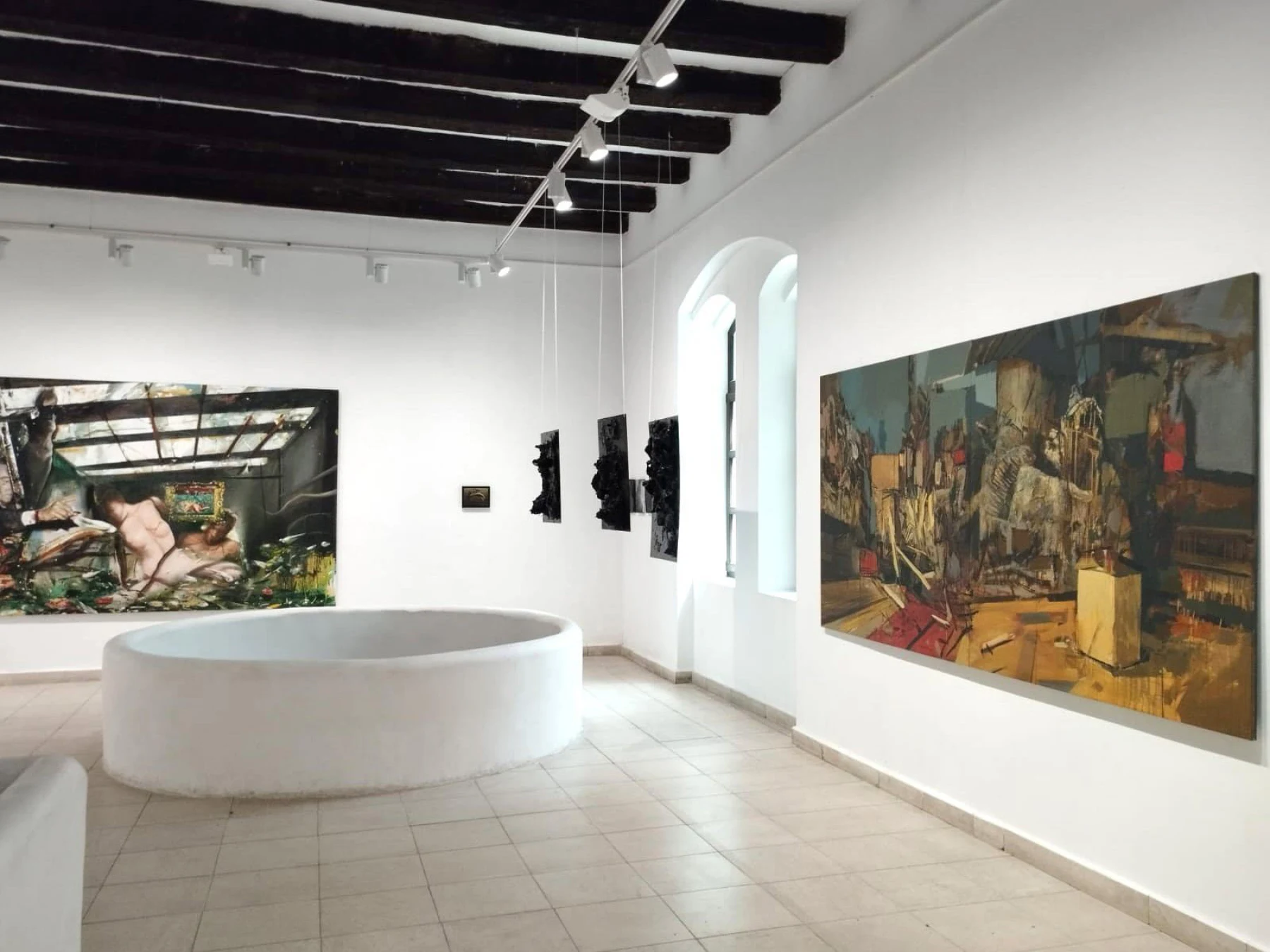
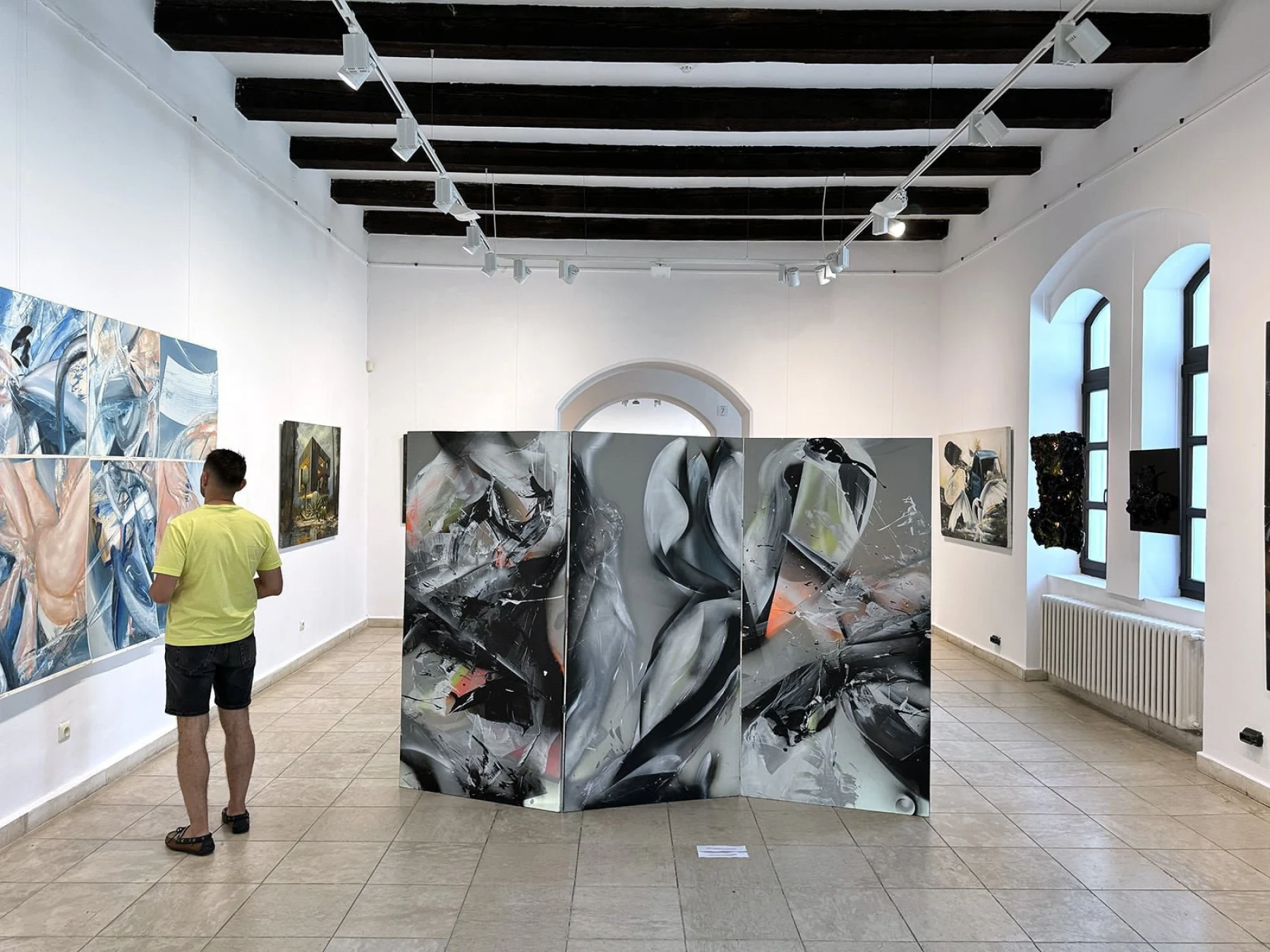
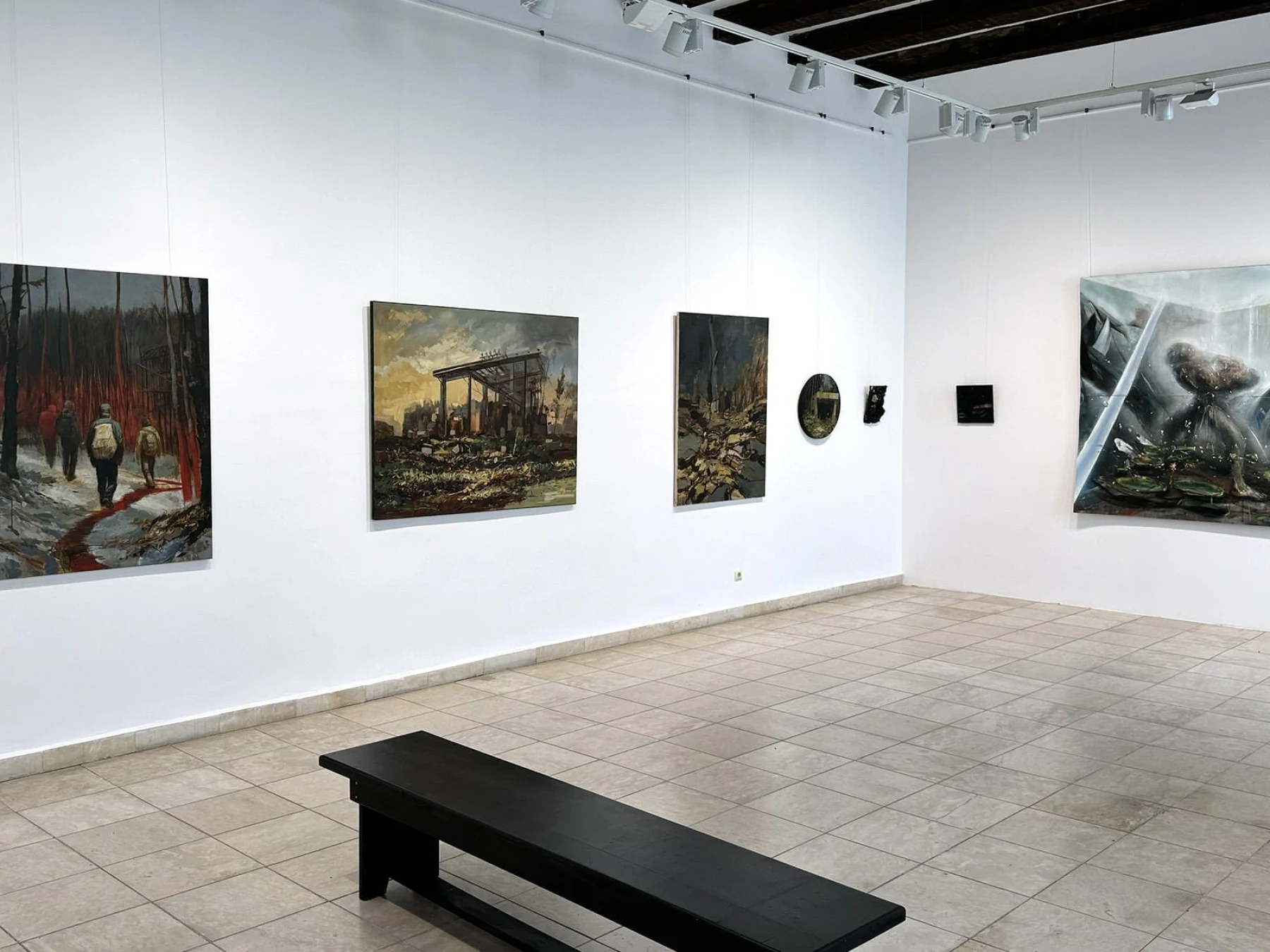
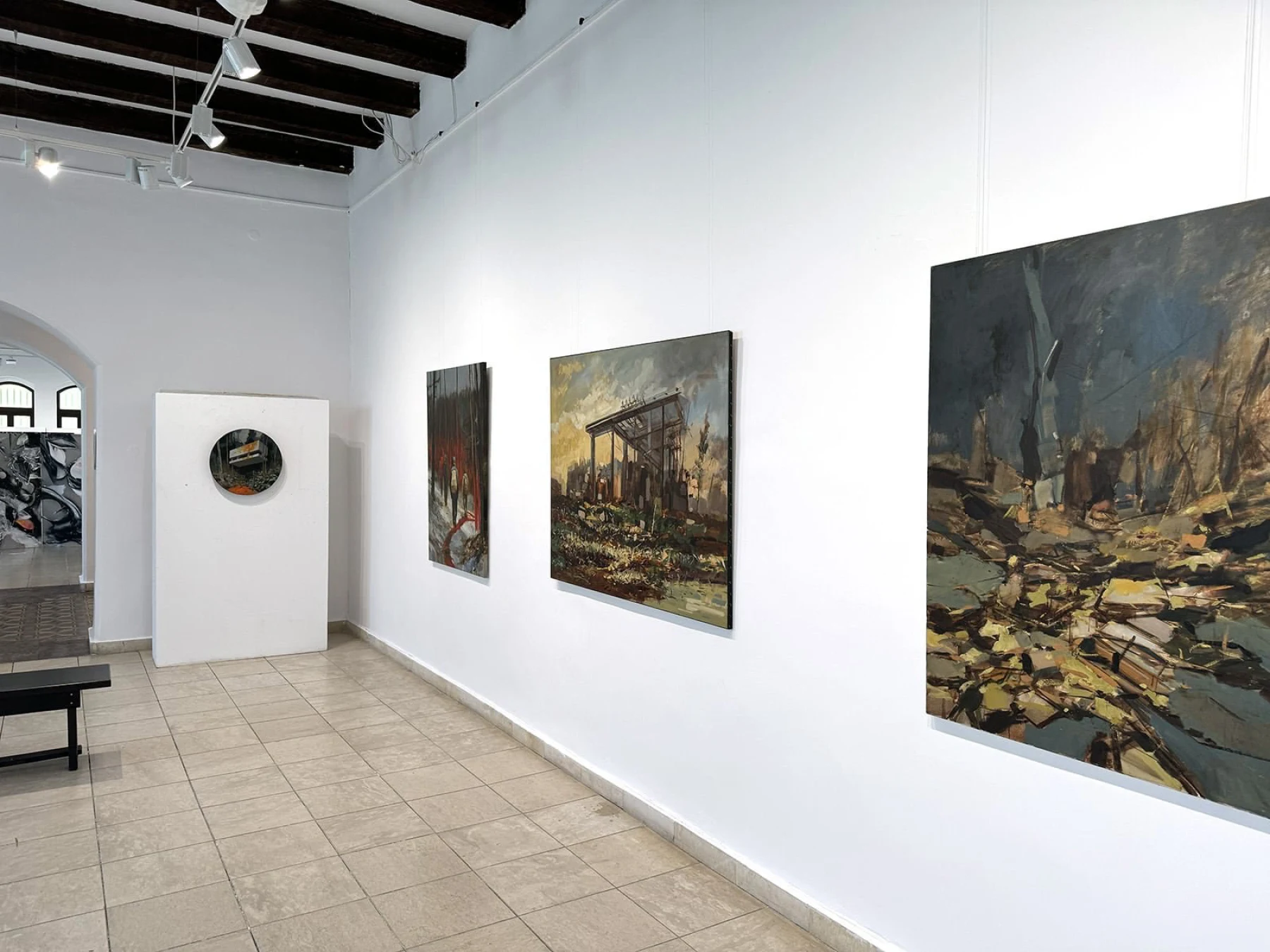
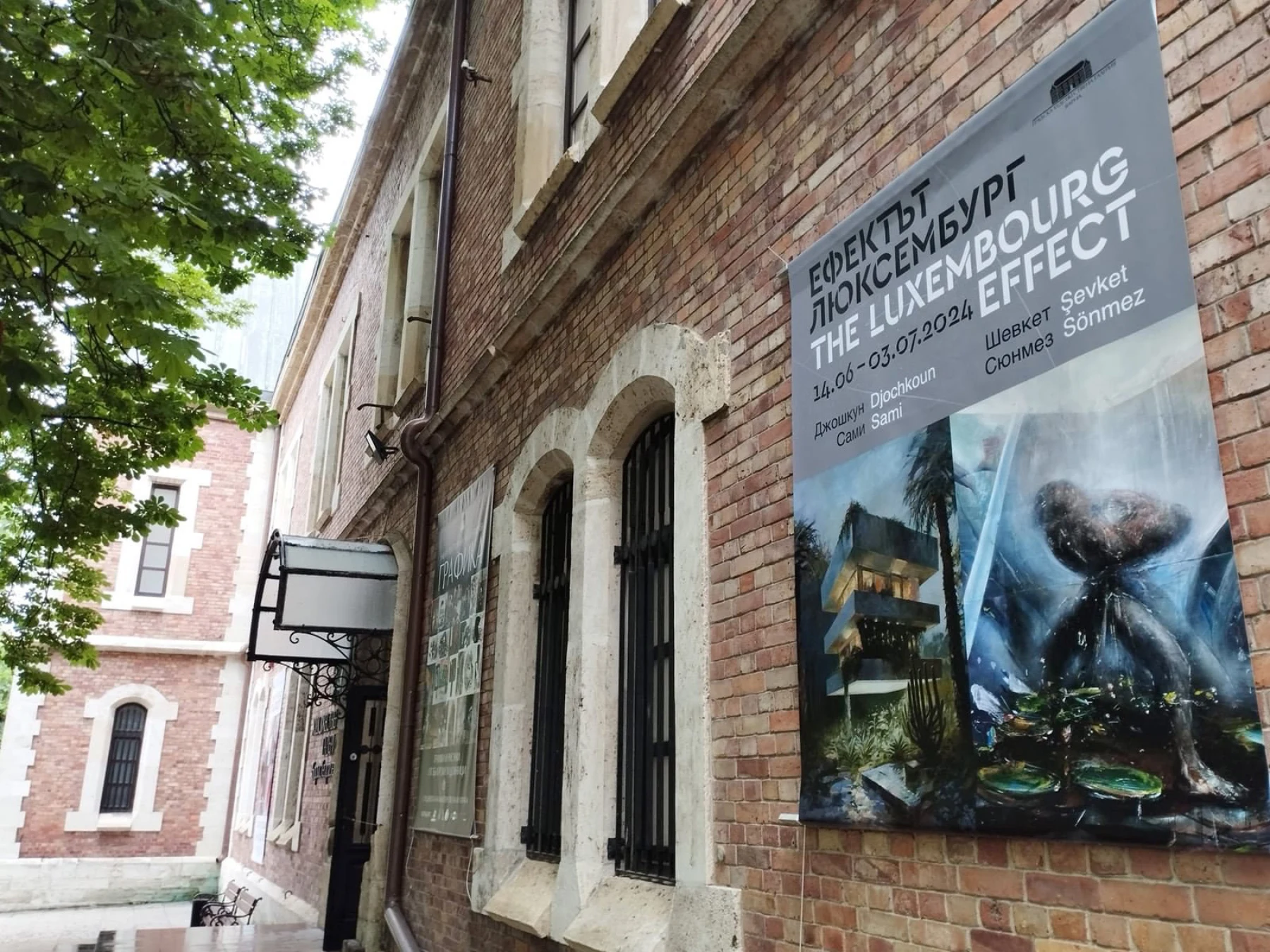
The Luxembourg Effect
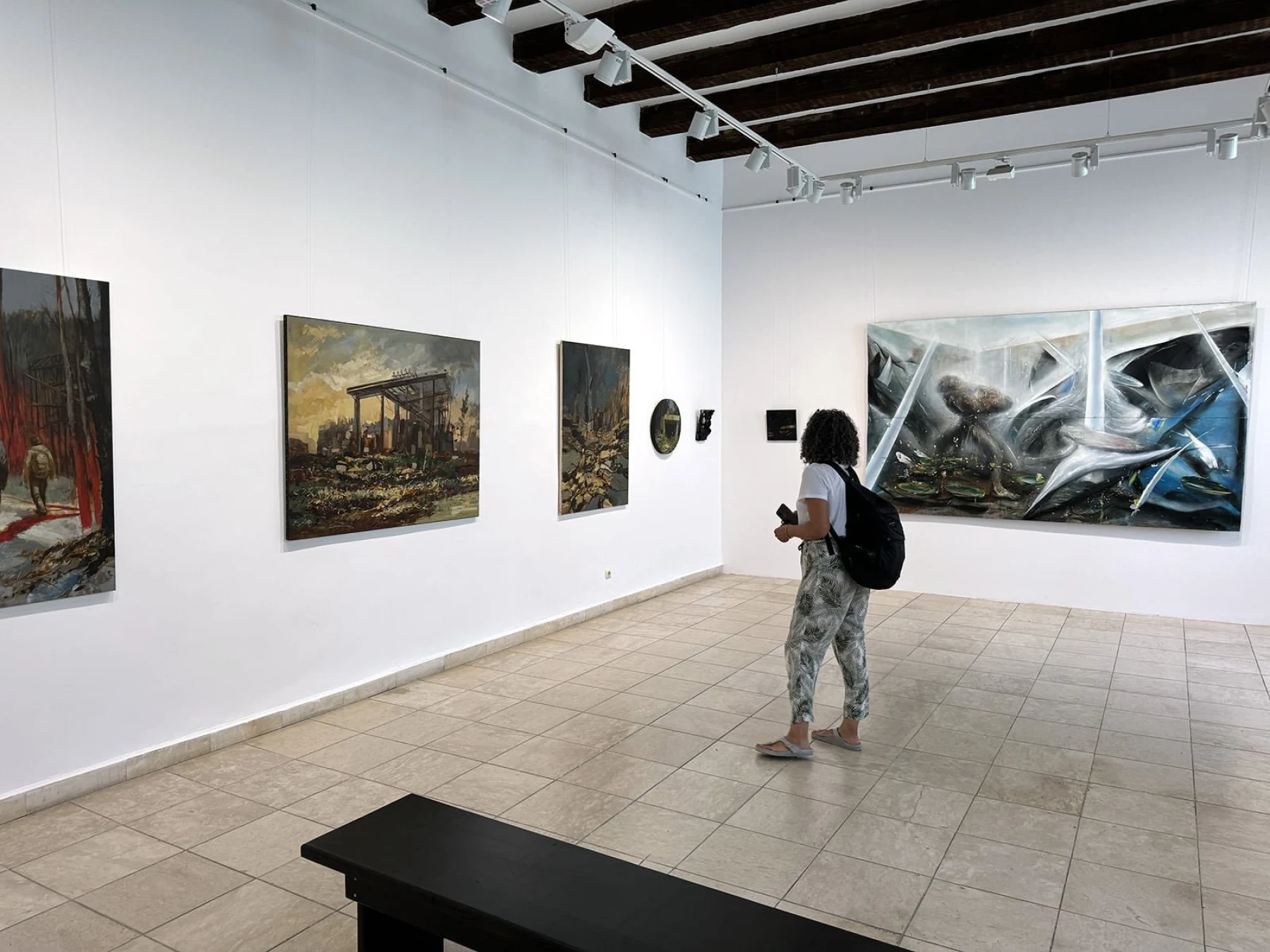
"The Luxembourg Effect" draws its name from the eponymous phenomenon in radio physics first documented by radio enthusiasts in the 1930’s.[1] This effect, also known as ionospheric cross-modulation, occurs when signals interact in the ionosphere, reflecting and refracting radio waves. Similarly, within the fractured landscape of contemporary existence notions and concepts are freely flying, and by confounding signals and meaning we tend to lose sight of what truly surrounds us. Amidst the noise, a process of meaningful comprehension becomes elusive, and a vast, incomprehensible network consisting of the so-called "hyperobjects" [2] emerges as a viable explanation for today’s experience. The effects and manifestations of those hyperobjects can be widely dispersed across different locations, making their entire form impossible to see or feel all at once, challenging the notion of individualism. Thus, individual experience fades into the fog of uncertainty, and we are oversaturated with messages, soon to find ourselves excluded, without ever knowing why it happens to us. Nowadays, artists grapple with concepts and phenomena that are vast, complex, and often exceed human scales of understanding. Confronted with the deeply interconnected phenomena shaping contemporary existence, a central question arises: How can art, and particularly painting reflect these complex issues?
In a remote part of the world, far away somewhere in Alaska lies a semi-secretive facility famous among the online conspiracy circles by its acronym HAARP (High-frequency Active Auroral Research Program). A source for many conspiracy theories about its purpose, like the assumed ability to cause earthquakes and accelerate global warming, HAARP is a former military research and science site currently operated by the University of Alaska, aimed at studying the properties and behaviour of the ionosphere. By transmitting a sequence of tones and music using amplitude modulation (AM) on two different radio frequencies, HAARP scientists were able to reproduce and record a "Luxembourg Effect", and if you’re curious enough you can listen to those recordings. They are strangely beautiful and haunting. We hear a sound that has no identifiable connection to its sources—neither music nor a human voice. Instead, it manifests as a continuous, ambient noise on a planetary scale. The fundamental act of speaking and creating meaning is exposed and simplified; there is no artist or performer, and nothing takes place. In one sense, it’s an illusion, but an illusion so captivating that it becomes lyrical; it is music.
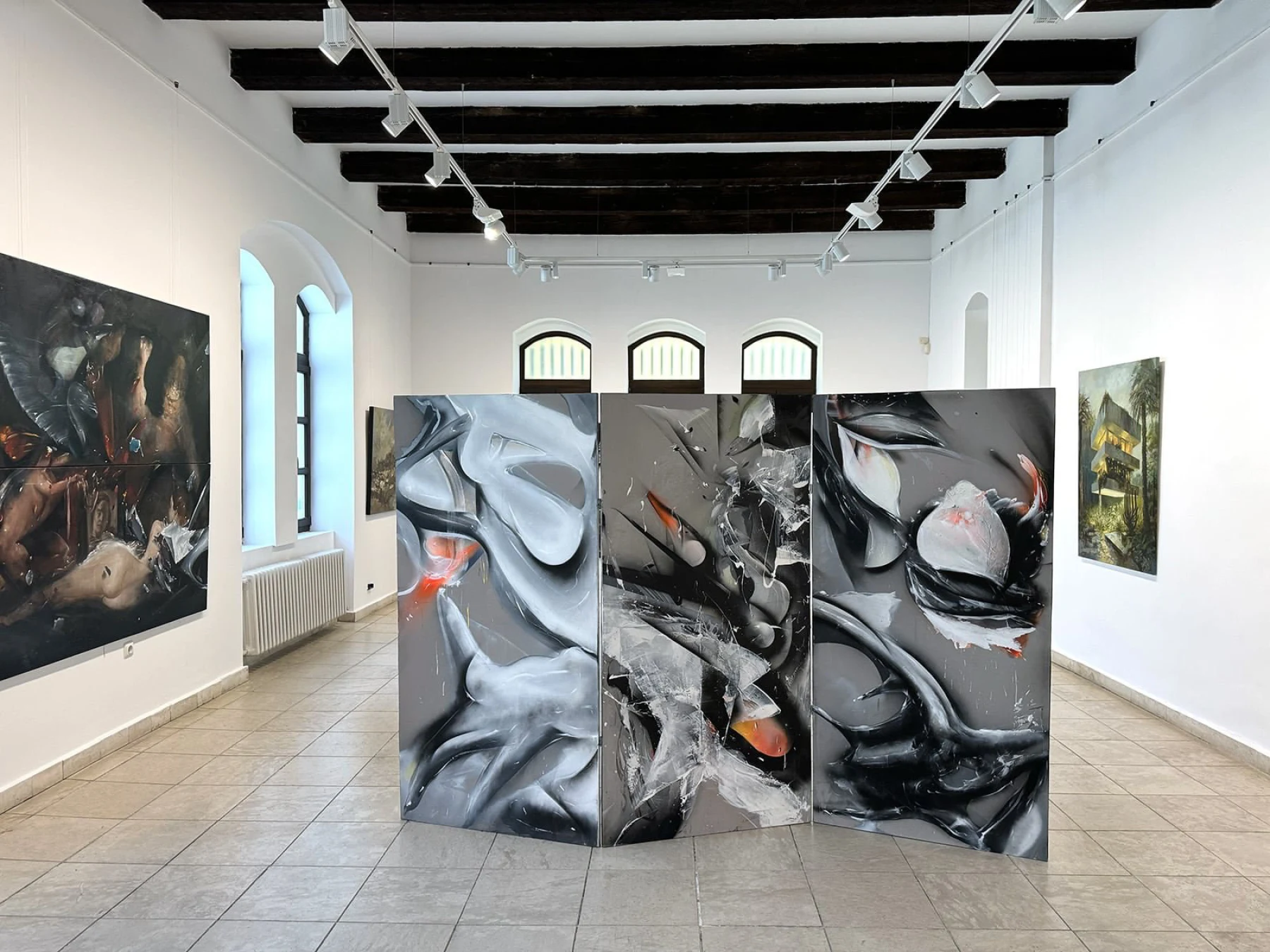
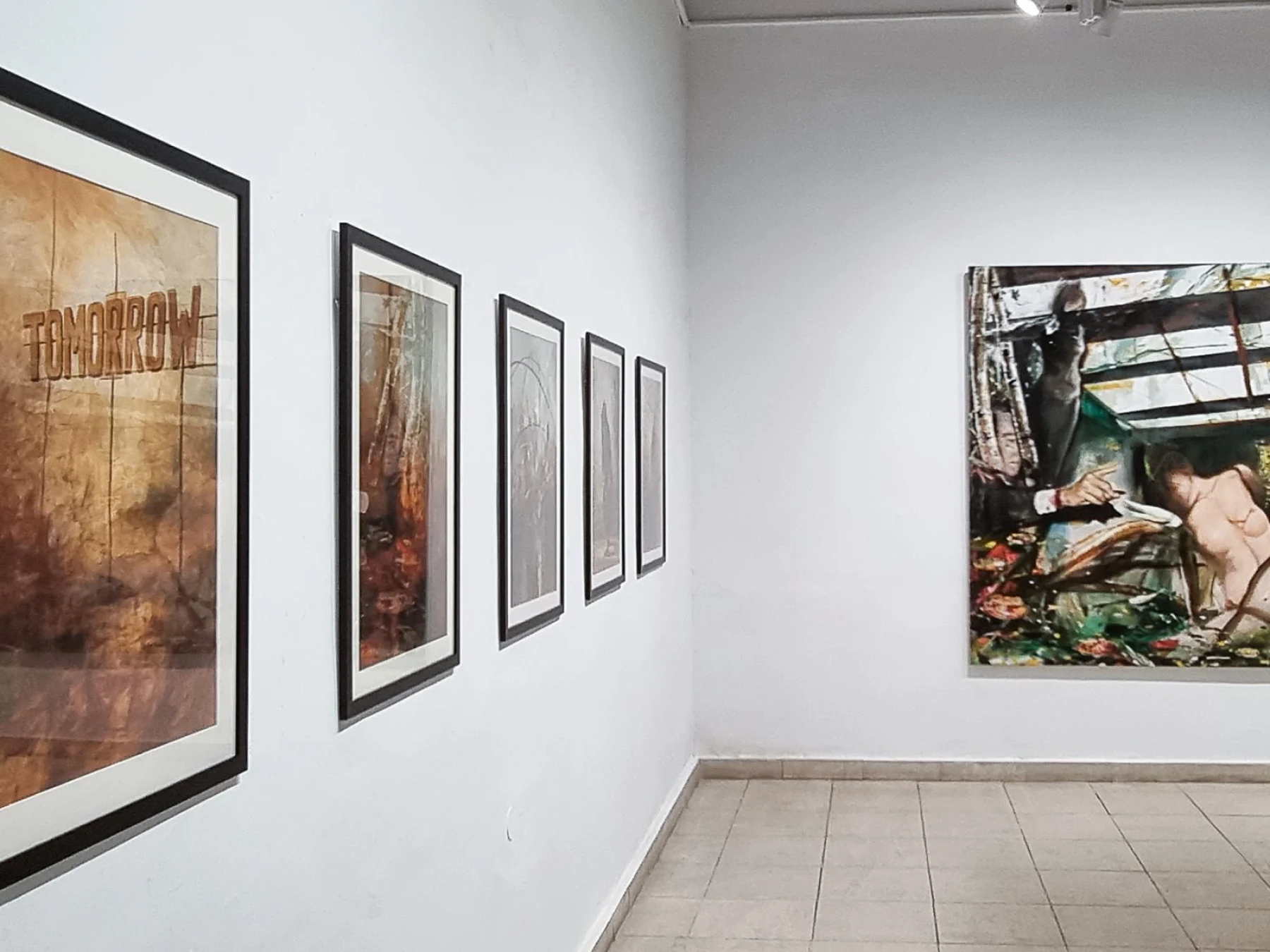
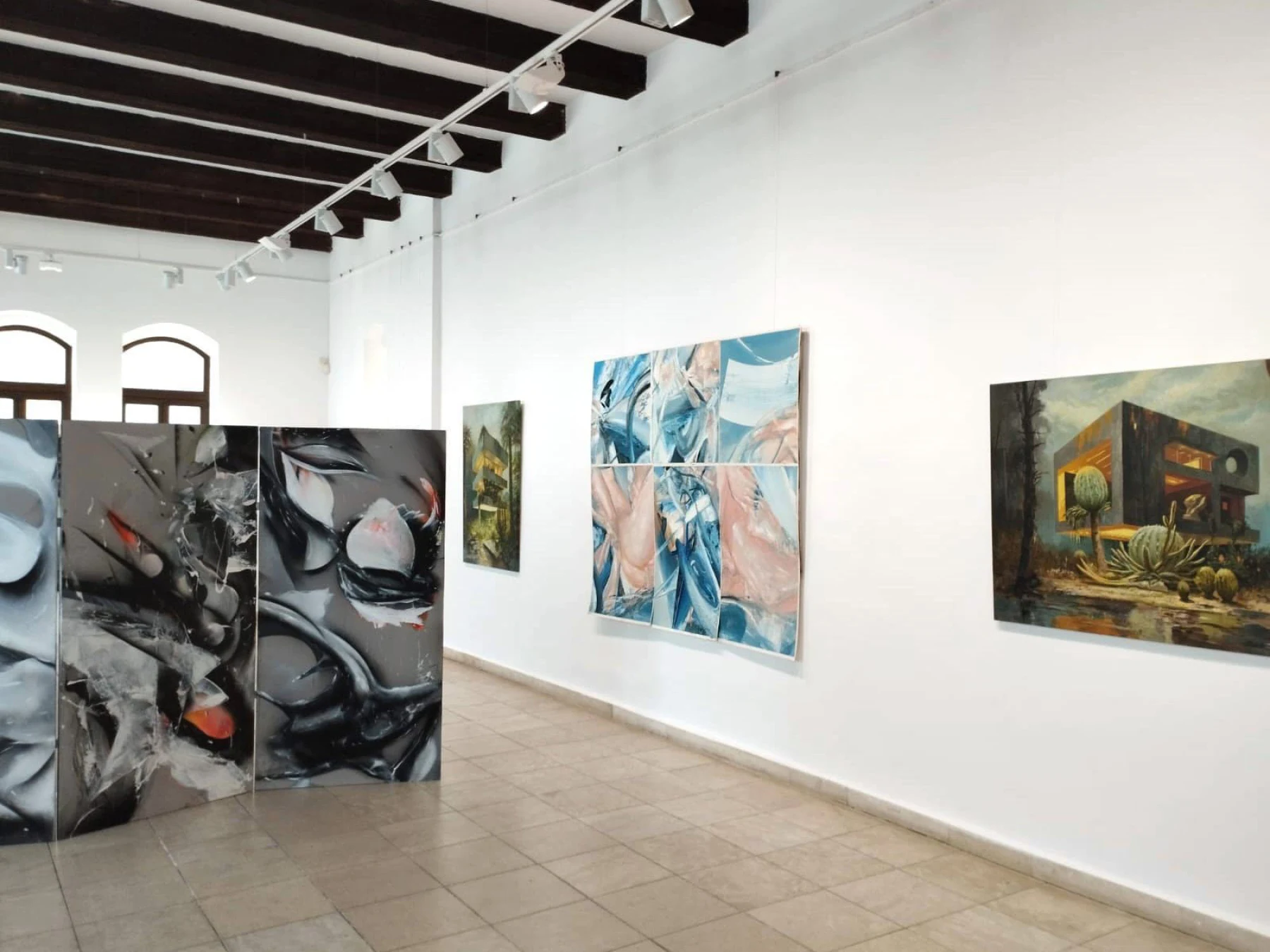
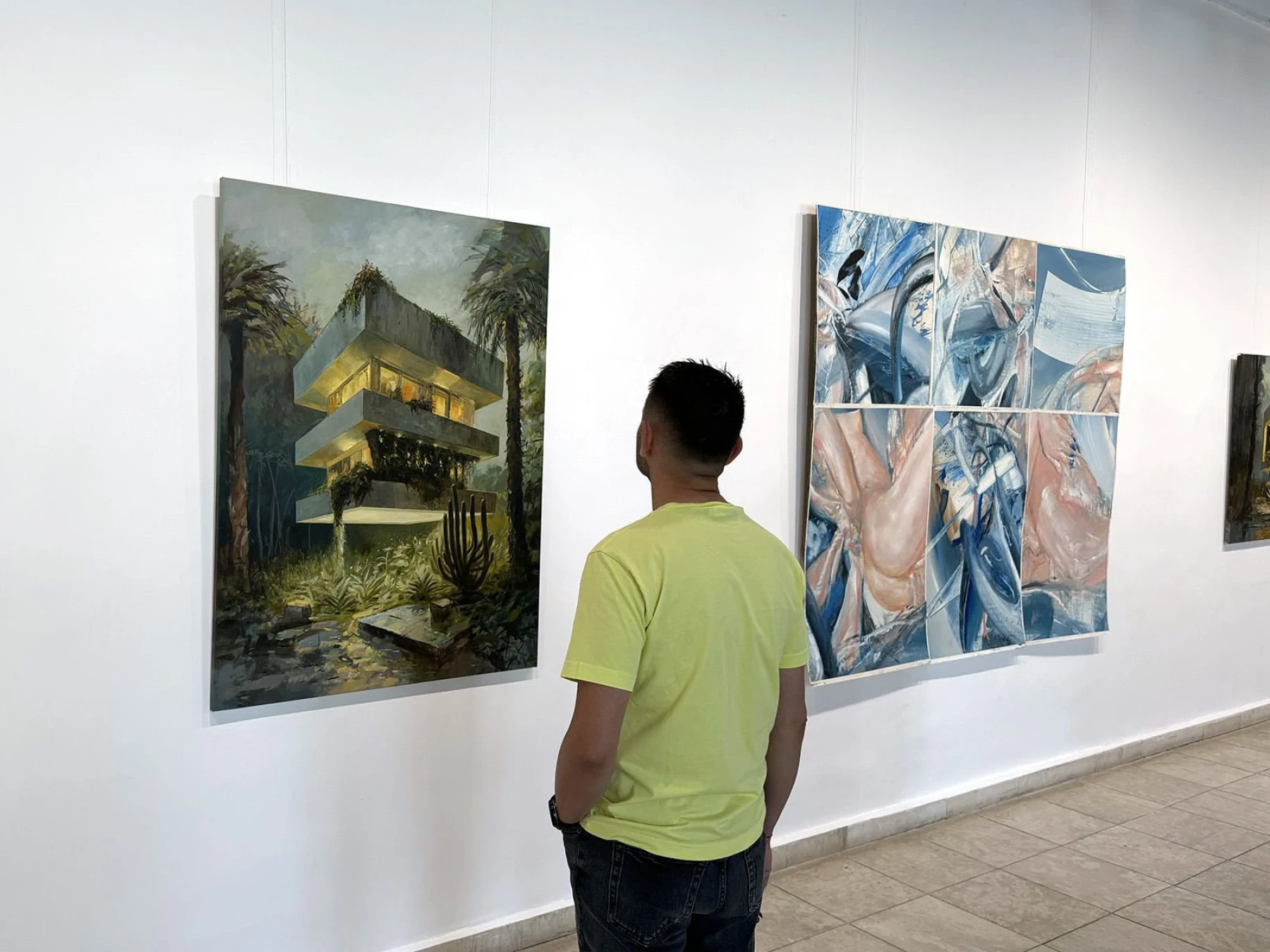
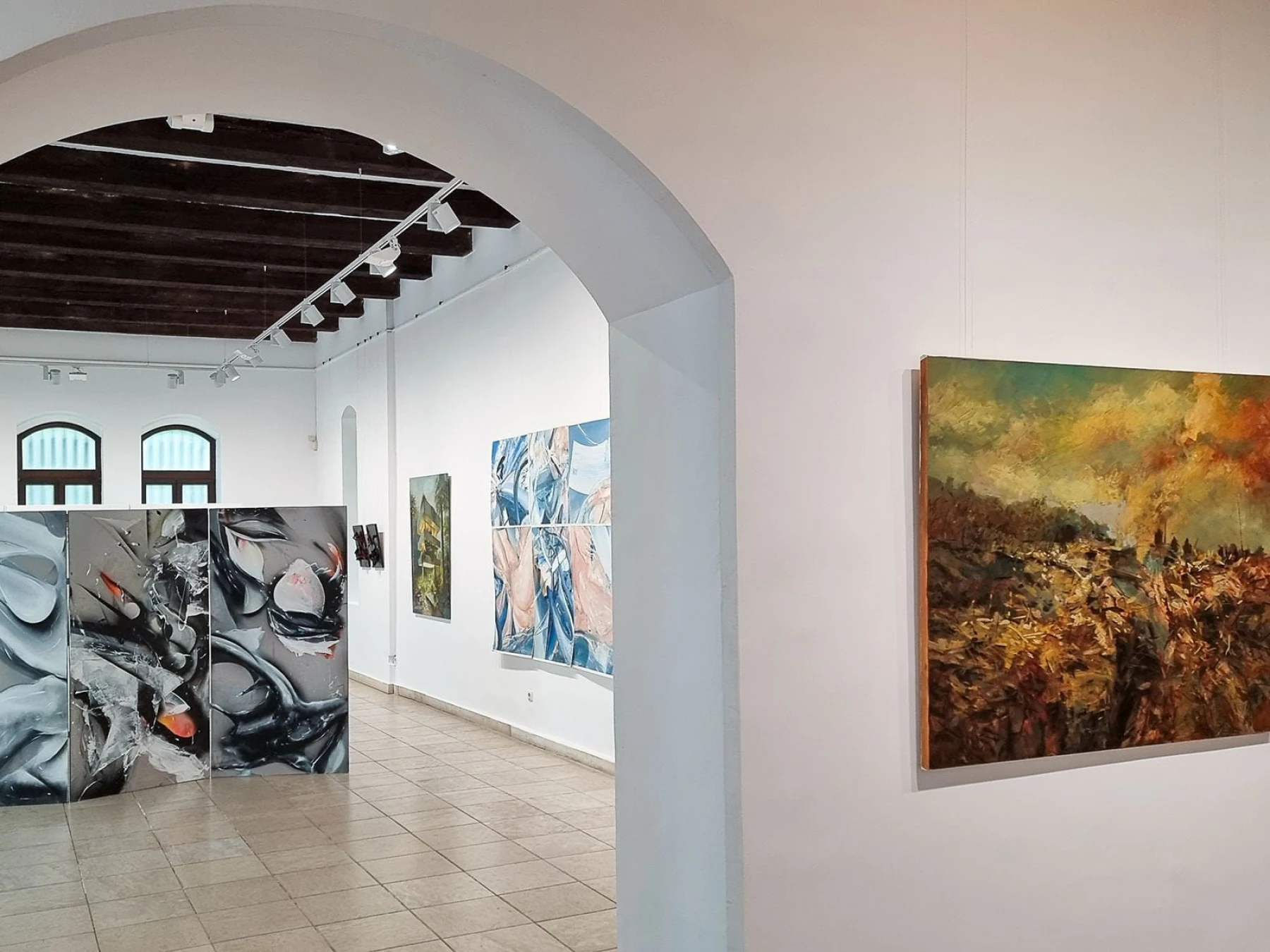
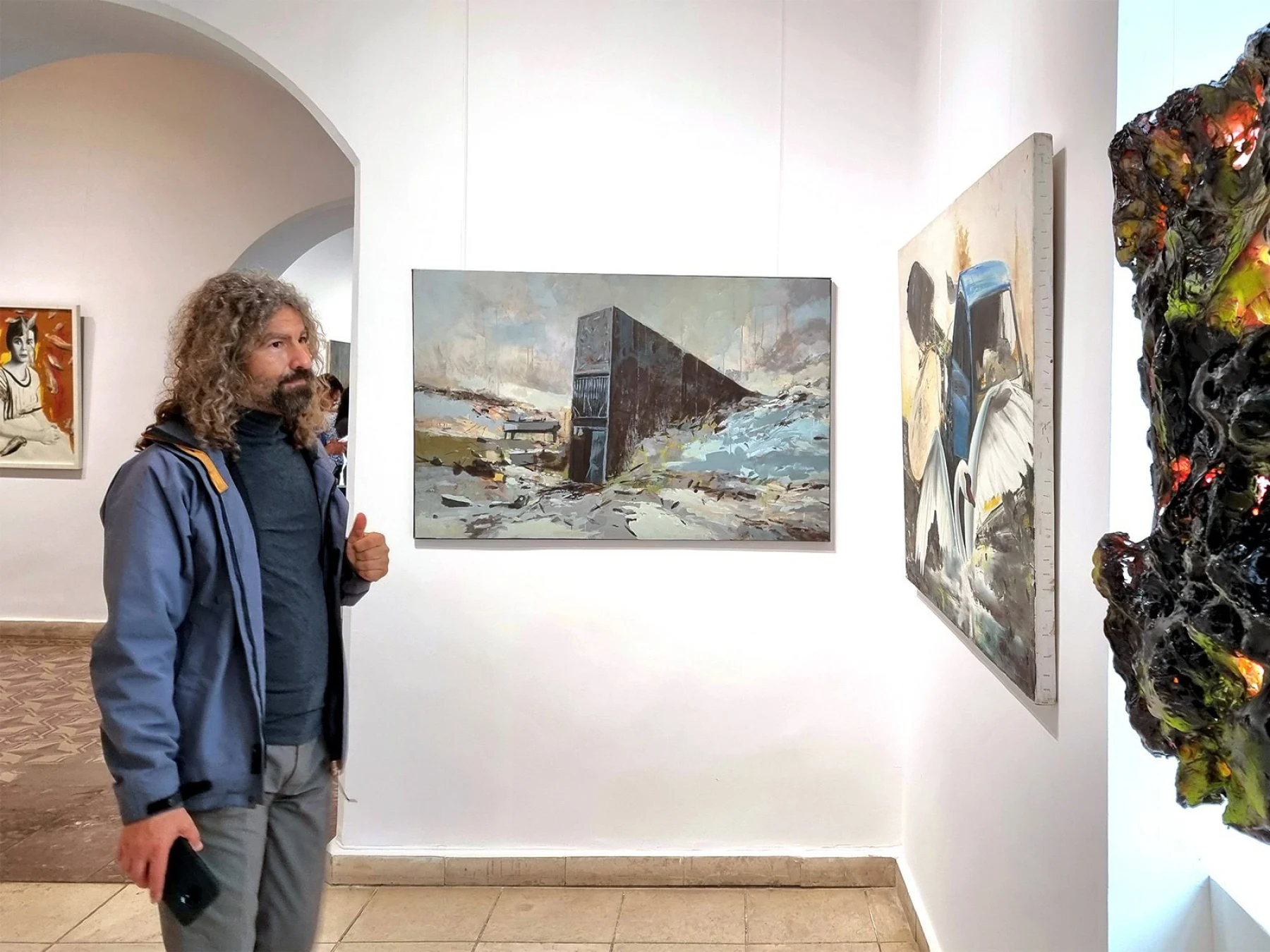
Djochkoun Sami and Sevket Sönmez, the artists featured in the exhibition "The Luxembourg Effect" are both intrigued by the theme of transformation of personal and collective experiences, becoming in itself a process of "sublimation". Sevket Sönmez‘s paintings, paravents, and assemblages creeping and stretching over the space are infused with personal reminiscences, offering a thought-provoking and enigmatic reflection on contemporary visual production and recycling of images and symbols. On the other end, Djochkoun Sami‘s ink drawings and paintings delve into the darker waters of regress and decay while maintaining a dialogue with the history of the medium. In a time where art often embraces dynamic mediums and performative platforms, both artists utilize more traditional tactics and reinterpretations as a medium for inquiries. For them, the canvas is a mirror for introspection, a swelling net of references regarding aspects of the process of "sublimation". This quest is an intricate dance of elements and ideas, challenging us to find balance within a complexity where rational thought comes to an end and we suddenly encounter something wholly and perturbingly 'other'. As if looking through a magnifying glass, Sami and Sönmez address themes like the ambivalence of visual perception, the growing insecurity of the individual, and a sense of trauma, loss, and uncertainty. Depriving their works of a thematic statement, the artists challenge the viewer’s perception: What does one expect to see?
"The Luxembourg Effect" invites you to get close, to hear all the doubts, imperfections and idiosyncratic qualities which both artists try to convey in an ambient mixture of styles, surfaces, themes and painterly spaces. If we assume that there are two types of painters: one who is embedded in a sense of place and one who records what he sees in passing, we can assert that Sami and Sönmez possess both qualities. Their seductive quality is the fluidity they give both to the colour and the painted alike, without trying to be too clever or cynical. Thus, it can be said that this exhibition is a process of broadcasting and a mixture of two different personalities, of two artists who employ and use their alchemy to highlight the fragile structure of images in relation to time, space and memory.
1. “The Luxembourg Effect” is a phenomenon in radio communications where a signal transmitted from a powerful station in one location is reflected back to Earth by the ionosphere and interferes with another signal on the same or a nearby frequency from a different location. This can cause an unusual blending of signals, creating a mix where elements of both transmissions can be heard simultaneously. The effect is named after observations made with the powerful radio transmissions from Radio Luxembourg in the mid-20th century, which could be heard interfering with other broadcasts across Europe.
2. “Hyperobjects“ is a term coined by philosopher Timothy Morton to describe objects that are so massively distributed in time and space that they transcend local manifestations. Morton introduced the concept in his 2013 book *Hyperobjects: Philosophy and Ecology after the End of the World*. Hyperobjects include things like climate change, nuclear materials, and even the internet—entities so large and systemically distributed that they challenge conventional ways of thinking about what a thing is in the first place.
In a remote part of the world, far away somewhere in Alaska lies a semi-secretive facility famous among the online conspiracy circles by its acronym HAARP (High-frequency Active Auroral Research Program). A source for many conspiracy theories about its purpose, like the assumed ability to cause earthquakes and accelerate global warming, HAARP is a former military research and science site currently operated by the University of Alaska, aimed at studying the properties and behaviour of the ionosphere. By transmitting a sequence of tones and music using amplitude modulation (AM) on two different radio frequencies, HAARP scientists were able to reproduce and record a "Luxembourg Effect", and if you’re curious enough you can listen to those recordings. They are strangely beautiful and haunting. We hear a sound that has no identifiable connection to its sources—neither music nor a human voice. Instead, it manifests as a continuous, ambient noise on a planetary scale. The fundamental act of speaking and creating meaning is exposed and simplified; there is no artist or performer, and nothing takes place. In one sense, it’s an illusion, but an illusion so captivating that it becomes lyrical; it is music.
Djochkoun Sami and Sevket Sönmez, the artists featured in the exhibition "The Luxembourg Effect" are both intrigued by the theme of transformation of personal and collective experiences, becoming in itself a process of "sublimation". Sevket Sönmez‘s paintings, paravents, and assemblages creeping and stretching over the space are infused with personal reminiscences, offering a thought-provoking and enigmatic reflection on contemporary visual production and recycling of images and symbols. On the other end, Djochkoun Sami‘s ink drawings and paintings delve into the darker waters of regress and decay while maintaining a dialogue with the history of the medium. In a time where art often embraces dynamic mediums and performative platforms, both artists utilize more traditional tactics and reinterpretations as a medium for inquiries. For them, the canvas is a mirror for introspection, a swelling net of references regarding aspects of the process of "sublimation". This quest is an intricate dance of elements and ideas, challenging us to find balance within a complexity where rational thought comes to an end and we suddenly encounter something wholly and perturbingly 'other'. As if looking through a magnifying glass, Sami and Sönmez address themes like the ambivalence of visual perception, the growing insecurity of the individual, and a sense of trauma, loss, and uncertainty. Depriving their works of a thematic statement, the artists challenge the viewer’s perception: What does one expect to see?
"The Luxembourg Effect" invites you to get close, to hear all the doubts, imperfections and idiosyncratic qualities which both artists try to convey in an ambient mixture of styles, surfaces, themes and painterly spaces. If we assume that there are two types of painters: one who is embedded in a sense of place and one who records what he sees in passing, we can assert that Sami and Sönmez possess both qualities. Their seductive quality is the fluidity they give both to the colour and the painted alike, without trying to be too clever or cynical. Thus, it can be said that this exhibition is a process of broadcasting and a mixture of two different personalities, of two artists who employ and use their alchemy to highlight the fragile structure of images in relation to time, space and memory.
1. “The Luxembourg Effect” is a phenomenon in radio communications where a signal transmitted from a powerful station in one location is reflected back to Earth by the ionosphere and interferes with another signal on the same or a nearby frequency from a different location. This can cause an unusual blending of signals, creating a mix where elements of both transmissions can be heard simultaneously. The effect is named after observations made with the powerful radio transmissions from Radio Luxembourg in the mid-20th century, which could be heard interfering with other broadcasts across Europe.
2. “Hyperobjects“ is a term coined by philosopher Timothy Morton to describe objects that are so massively distributed in time and space that they transcend local manifestations. Morton introduced the concept in his 2013 book *Hyperobjects: Philosophy and Ecology after the End of the World*. Hyperobjects include things like climate change, nuclear materials, and even the internet—entities so large and systemically distributed that they challenge conventional ways of thinking about what a thing is in the first place.
Exhibited Works
Beacon, 2023
Acrylic on canvas
, 114 × 142 cm
Planetarium, 2023
Mixed media on paper
, 70 × 50 cm
Power Grid, 2023
Mixed media on paper
, 70 × 50 cm
Snare, 2023
Acrylic on canvas
, ⌀ 50 cm.
Agent Orange, 2023
Acrylic on canvas
, ⌀ 50 cm.
Nueva Germania, 2023
Acrylic on canvas
, 130 × 97 cm.
Bad Seed, 2023
Oil on canvas
, 97 × 130 cm.
BY Residence, 2023
Oil on canvas
, 130 × 97 cm.
Veil, 2022
Mixed media on paper
, 70 × 50 cm
Babushka, 2022
Mixed media on paper
, 70 × 50 cm
Tomorrow, 2022
Mixed media on paper
, 70 × 50 cm
Deserter, 2022
Mixed media on paper
, 70 × 100 cm
Overlap, 2022
Mixed media on paper
, 70 × 50 cm
Drone, 2022
Mixed media on paper
, 70 × 100 cm
Facility, 2022
Mixed media on paper
, 70 × 50 cm
Invasion, 2022
Ink on paper
, 50 × 70 cm
Searching Mr. Kurtz, 2022
Acrylic on canvas
, 130 × 97 cm
Prank, 2022
Acrylic on canvas
, 130 × 97 cm
Anyverse, 2022
Mixed media on paper
, 70 × 100 cm
The Conqueror, 2021
Oil on canvas
, 130 × 97 cm
A New Capital City, 2021
Oil on canvas
, 114 × 146 cm
Shore, 2021
Oil on canvas
, 103 × 103 cm
Cengizland, 2021
Oil on canvas
, 114 × 142 cm
Dereliction, 2014
Oil on canvas
, 97 × 130 cm
A Terrible Beauty, 2013
Oil on canvas
, 97 × 130 cm
Plunder, 2012
Acrylic on canvas
, 145 × 290 cm
2024
The Luxembourg Effect
"Boris Georgiev" Art Gallery, Varna, BG
2026
Sofia-Istanbul: Bridge of Art
Beyoglu Municipality Art Gallery, Istanbul, TR
2025
Sofia-Istanbul: Bridge of Art
Shipka 6, Sofia, BG
2025
The Luxembourg Effect
Rusi Karabiberov Art Gallery, Nova Zagora, BG
2024
In The End, There Is No End
Istanbul Concept Gallery, İstanbul, TR
2024
The Luxembourg Effect
"Boris Georgiev" Art Gallery, Varna, BG
2023
Parrhesia III
Art Contact Art Fair, Istanbul, TR
2026
Sofia-Istanbul: Bridge of Art
Beyoglu Municipality Art Gallery, Istanbul, TR
2025
Sofia-Istanbul: Bridge of Art
Shipka 6, Sofia, BG
2025
The Luxembourg Effect
Rusi Karabiberov Art Gallery, Nova Zagora, BG
2024
In The End, There Is No End
Istanbul Concept Gallery, İstanbul, TR
2024
The Luxembourg Effect
"Boris Georgiev" Art Gallery, Varna, BG
2023
Parrhesia III
Art Contact Art Fair, Istanbul, TR
2026
Sofia-Istanbul: Bridge of Art
Beyoglu Municipality Art Gallery, Istanbul, TR
2025
Sofia-Istanbul: Bridge of Art
Shipka 6, Sofia, BG
2025
The Luxembourg Effect
Rusi Karabiberov Art Gallery, Nova Zagora, BG
2024
In The End, There Is No End
Istanbul Concept Gallery, İstanbul, TR
2024
The Luxembourg Effect
"Boris Georgiev" Art Gallery, Varna, BG
2023
Parrhesia III
Art Contact Art Fair, Istanbul, TR
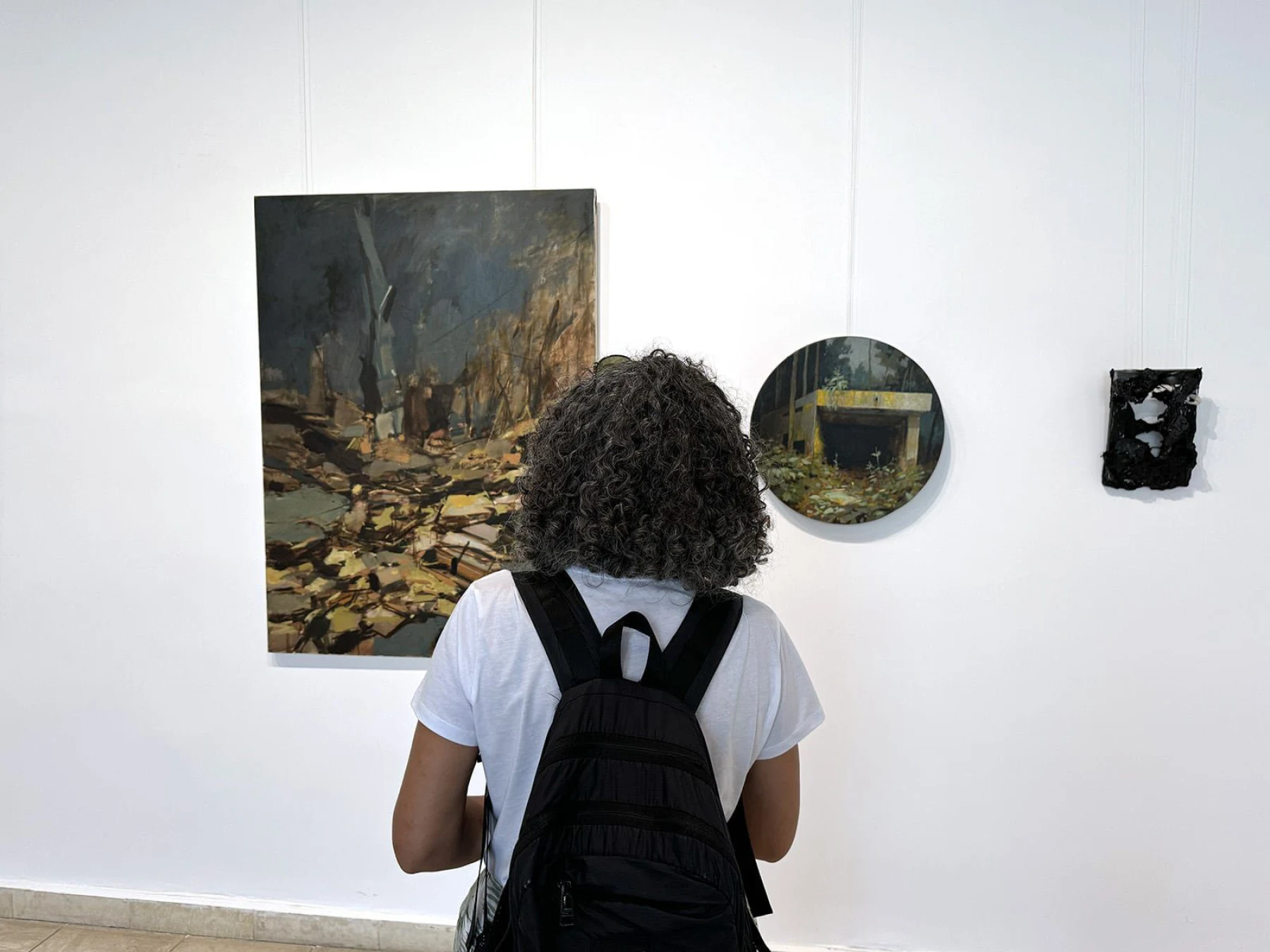
In “Snare” (2023), a low, bunker-like concrete structure lies half-submerged in a dark, overgrown forest. Framed by the circular tondo, its pitch-black opening becomes a central void, lending the building a silent sense of entrapment. Acidic yellow stains trace the upper parapet, echoing the moss and vegetation overtaking the concrete. The circular format suggests the restricted view of a lens or scope, turning an abandoned architectural fragment into an image poised between observation and threat.
2026
Sofia-Istanbul: Bridge of Art
Beyoglu Municipality Art Gallery, Istanbul, TR
2025
Sofia-Istanbul: Bridge of Art
Shipka 6, Sofia, BG
2025
The Luxembourg Effect
Rusi Karabiberov Art Gallery, Nova Zagora, BG
2024
In The End, There Is No End
Istanbul Concept Gallery, İstanbul, TR
2024
The Luxembourg Effect
"Boris Georgiev" Art Gallery, Varna, BG
In “Agent Orange” (2023), a pale modernist structure appears suspended within a dark, encroaching forest. Vivid orange paint runs down its concrete façade and spreads across the ground, turning the building into a site of contamination. The title invokes the toxic herbicide used during the Vietnam War, framing the architectural intervention as both ecological and political injury. Contained within a circular format, the scene resembles a view through a lens or scope, isolating the lasting trace of human intervention in the natural world.
2026
Sofia-Istanbul: Bridge of Art
Beyoglu Municipality Art Gallery, Istanbul, TR
2025
Sofia-Istanbul: Bridge of Art
Shipka 6, Sofia, BG
2025
The Luxembourg Effect
Rusi Karabiberov Art Gallery, Nova Zagora, BG
2024
In The End, There Is No End
Istanbul Concept Gallery, İstanbul, TR
2024
The Luxembourg Effect
"Boris Georgiev" Art Gallery, Varna, BG
In this work, Djochkoun Sami invokes the memory of Nueva Germania, the failed late-19th-century Paraguayan colony founded by Bernhard Förster around a racial utopian ideology. Relocating the narrative to a snowbound European forest, Sami depicts figures following a vivid crimson path through dark woods and marked trees. The blood-red trail becomes a metaphor for the blind pursuit of ideological purity. By returning the setting to European soil, the work presents fanatical dogma not as a closed historical episode, but as a latent and recurring threat within contemporary society.
2025
The Luxembourg Effect
Rusi Karabiberov Art Gallery, Nova Zagora, BG
2024
In The End, There Is No End
Istanbul Concept Gallery, İstanbul, TR
2024
The Luxembourg Effect
"Boris Georgiev" Art Gallery, Varna, BG
In “Bad Seed” (2023), a monolithic brutalist cube hovers within an overgrown landscape. Suspended above cacti, desert vegetation and reflecting water, the structure appears at once weightless and imposing. Warm artificial light emerges through rectangular openings and circular apertures, revealing traces of human presence within its rigid geometry. The title suggests an intrusive insertion into the landscape: an artificial presence that unsettles the boundary between architectural containment and untamed nature.
2025
Sofia-Istanbul: Bridge of Art
Shipka 6, Sofia, BG
2025
The Luxembourg Effect
Rusi Karabiberov Art Gallery, Nova Zagora, BG
2024
In The End, There Is No End
Istanbul Concept Gallery, İstanbul, TR
2024
The Luxembourg Effect
"Boris Georgiev" Art Gallery, Varna, BG
In “BY Residence”, an interplay of weight and lightness draws the viewer into a quiet, surreal space. Against a dense, shadowed forest, a brutalist structure appears to hover above the overgrown ground, its concrete mass rendered strangely weightless. Inspired by Magritte’s “The Empire of Light”, the work contrasts the cold opacity of the surrounding landscape with the warmth of the illuminated interior, holding comfort and unease in a delicate balance.
2026
Sofia-Istanbul: Bridge of Art
Beyoglu Municipality Art Gallery, Istanbul, TR
2025
Sofia-Istanbul: Bridge of Art
Shipka 6, Sofia, BG
2025
The Luxembourg Effect
Rusi Karabiberov Art Gallery, Nova Zagora, BG
2024
In The End, There Is No End
Istanbul Concept Gallery, İstanbul, TR
2024
The Luxembourg Effect
"Boris Georgiev" Art Gallery, Varna, BG
2025
Sofia-Istanbul: Bridge of Art
Shipka 6, Sofia, BG
2024
In The End, There Is No End
Istanbul Concept Gallery, İstanbul, TR
2024
The Luxembourg Effect
"Boris Georgiev" Art Gallery, Varna, BG
2022
Slow Homecoming
City Art Gallery, Silistra, BG
2026
Sofia-Istanbul: Bridge of Art
Beyoglu Municipality Art Gallery, Istanbul, TR
2025
Sofia-Istanbul: Bridge of Art
Shipka 6, Sofia, BG
2024
In The End, There Is No End
Istanbul Concept Gallery, İstanbul, TR
2024
The Luxembourg Effect
"Boris Georgiev" Art Gallery, Varna, BG
2022
Slow Homecoming
City Art Gallery, Silistra, BG
2025
Sofia-Istanbul: Bridge of Art
Shipka 6, Sofia, BG
2025
The Luxembourg Effect
Rusi Karabiberov Art Gallery, Nova Zagora, BG
2024
In The End, There Is No End
Istanbul Concept Gallery, İstanbul, TR
2024
The Luxembourg Effect
"Boris Georgiev" Art Gallery, Varna, BG
2022
Slow Homecoming
City Art Gallery, Silistra, BG
2025
Sofia-Istanbul: Bridge of Art
Shipka 6, Sofia, BG
2025
The Luxembourg Effect
Rusi Karabiberov Art Gallery, Nova Zagora, BG
2024
In The End, There Is No End
Istanbul Concept Gallery, İstanbul, TR
2024
The Luxembourg Effect
"Boris Georgiev" Art Gallery, Varna, BG
2022
Slow Homecoming
City Art Gallery, Silistra, BG
2026
Sofia-Istanbul: Bridge of Art
Beyoglu Municipality Art Gallery, Istanbul, TR
2025
Sofia-Istanbul: Bridge of Art
Shipka 6, Sofia, BG
2025
The Luxembourg Effect
Rusi Karabiberov Art Gallery, Nova Zagora, BG
2024
In The End, There Is No End
Istanbul Concept Gallery, İstanbul, TR
2024
The Luxembourg Effect
"Boris Georgiev" Art Gallery, Varna, BG
2022
Slow Homecoming
City Art Gallery, Silistra, BG
2025
The Luxembourg Effect
Rusi Karabiberov Art Gallery, Nova Zagora, BG
2024
In The End, There Is No End
Istanbul Concept Gallery, İstanbul, TR
2024
The Luxembourg Effect
"Boris Georgiev" Art Gallery, Varna, BG
2023
#HeyFreedom
Turkish Journalists Association Museum, Istanbul, TR
2022
Slow Homecoming
City Art Gallery, Silistra, BG
2025
The Luxembourg Effect
Rusi Karabiberov Art Gallery, Nova Zagora, BG
2024
The Luxembourg Effect
"Boris Georgiev" Art Gallery, Varna, BG
2023
HOME
The Department Store Gallery, London, UK
2022
Slow Homecoming
City Art Gallery, Silistra, BG
2025
The Luxembourg Effect
Rusi Karabiberov Art Gallery, Nova Zagora, BG
2024
The Luxembourg Effect
"Boris Georgiev" Art Gallery, Varna, BG
2022
Slow Homecoming
City Art Gallery, Silistra, BG
2022
Stalker
Pera Palace, Istanbul, TR
2022
Trace
Chamber of Architects of Turkey’s Gallery, Istanbul, TR
2024
The Luxembourg Effect
"Boris Georgiev" Art Gallery, Varna, BG
2022
Slow Homecoming
City Art Gallery, Silistra, BG
2024
The Luxembourg Effect
"Boris Georgiev" Art Gallery, Varna, BG
2022
Slow Homecoming
City Art Gallery, Silistra, BG
2024
In The End, There Is No End
Istanbul Concept Gallery, İstanbul, TR
2024
The Luxembourg Effect
"Boris Georgiev" Art Gallery, Varna, BG
2022
Slow Homecoming
City Art Gallery, Silistra, BG
2024
The Luxembourg Effect
"Boris Georgiev" Art Gallery, Varna, BG
2022
Slow Homecoming
City Art Gallery, Silistra, BG
2022
Sumerki
Istanbul Concept Gallery, İstanbul, TR
2021
Inventory
Gallery Soyut, Ankara, TR
2024
The Luxembourg Effect
"Boris Georgiev" Art Gallery, Varna, BG
2022
Slow Homecoming
City Art Gallery, Silistra, BG
2022
Sumerki
Istanbul Concept Gallery, İstanbul, TR
2021
Inventory
Gallery Soyut, Ankara, TR
2024
The Luxembourg Effect
"Boris Georgiev" Art Gallery, Varna, BG
2022
Slow Homecoming
City Art Gallery, Silistra, BG
2022
Sumerki
Istanbul Concept Gallery, İstanbul, TR
2022
Friends of the Sea
Biennial for Contemporary Art, Burgas, BG
2021
Inventory
Gallery Soyut, Ankara, TR
2021
Aura
Circolo di Roma, Istanbul, TR
2024
The Luxembourg Effect
"Boris Georgiev" Art Gallery, Varna, BG
2022
Slow Homecoming
City Art Gallery, Silistra, BG
2022
Sumerki
Istanbul Concept Gallery, İstanbul, TR
2024
The Luxembourg Effect
"Boris Georgiev" Art Gallery, Varna, BG
2025
The Luxembourg Effect
Rusi Karabiberov Art Gallery, Nova Zagora, BG
2024
The Luxembourg Effect
"Boris Georgiev" Art Gallery, Varna, BG
2022
Slow Homecoming
City Art Gallery, Silistra, BG
2022
Sumerki
Istanbul Concept Gallery, İstanbul, TR
2014
Focus I: Free Association
Daire, İstanbul, TR
2024
The Luxembourg Effect
"Boris Georgiev" Art Gallery, Varna, BG
2022
Slow Homecoming
City Art Gallery, Silistra, BG
2013
The Contract
Mabeyn Gallery, Istanbul, TR